In this file
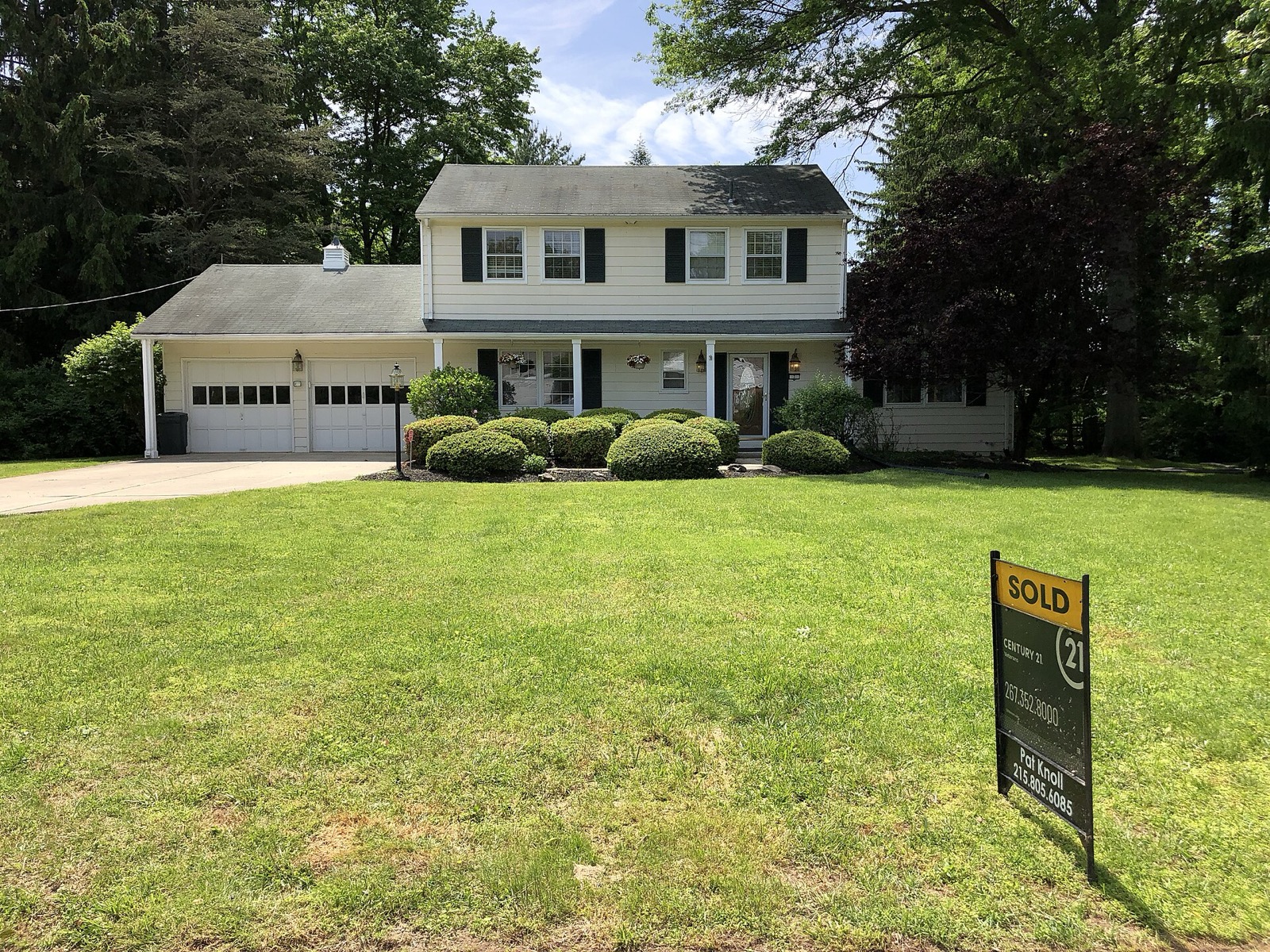
Selling in Nassau County puts three layers of government charges on one closing: the state transfer tax, county recording fees and federal tax on any gain. Each has its own rule for who pays. This page follows each layer to its source. It sits in the selling guides beside home value, and the buyer’s side of the table is in closing costs.
State transfer tax: how it is computed and who pays
New York State imposes a real estate transfer tax on conveyances of real property or interests in it when the consideration exceeds $500. The tax is computed at two dollars for each $500, or fractional part, of consideration.
The base tax and additional base tax are paid by the grantor, the seller, and cannot be paid directly or indirectly by the grantee, the buyer, except as provided in a contract between seller and buyer. On residential property, tax a buyer pays under such a contract is left out of the amount taxed. If the seller does not pay the tax, or is exempt, the buyer must pay it. Where the seller has failed to pay, the tax becomes the joint and several liability of the seller and the buyer, and the buyer who pays has a cause of action against the seller to recover it. Certain governmental organizations are exempt, and so are conveyances made without consideration and otherwise than in connection with a sale, including bona fide gifts.
The mansion tax
An additional tax, the mansion tax, of 1% of the sale price applies to residences where consideration is $1 million or more.
The mansion tax and supplemental tax are paid by the buyer. If the buyer does not pay the tax or is exempt, the seller must pay it.
For the mansion tax, consideration is the price paid or required to be paid, and it includes the amount of any mortgage, lien or other encumbrance. The Tax Department’s transfer tax page holds the rules.
Sales and transfers outside the tax
The transfer tax applies to a conveyance, which is the transfer of any interest in real property by any method, including sale, exchange and foreclosure. A lease or sublease counts as a transfer only where its term plus renewal options exceeds 49 years, among other conditions. The grantor is the person making the conveyance and the grantee is the person who obtains the property. These conveyances are not subject to the tax:
- Conveyances used to secure a debt or other obligation.
- Conveyances without additional consideration that confirm, correct, modify or supplement a prior conveyance.
- A deed of partition.
- Conveyances given pursuant to the federal Bankruptcy Act.
- Conveyances given in connection with a tax sale.
- A mere change of identity or form of ownership with no change in beneficial ownership.
- The execution of a contract to sell real property without the use or occupancy of the property, or the grant of an option to purchase it without use or occupancy.
A conveyance by devise, bequest or inheritance is not a conveyance for this tax. When an exempt governmental entity conveys title to a nonexempt buyer, the buyer pays the tax.
One exemption reaches only the mansion tax: conveyances for open space, parks or historic preservation to qualifying not-for-profit corporations.
What counts as consideration
Consideration is generally the fair market value, the amount a willing buyer would pay a willing seller for real property. It is generally determined by appraisal, based on the value of the real property at the time of the conveyance. It is not net fair market value, which is fair market value less the amount of any mortgages on the property. In some conveyances, the value of a lien or encumbrance remaining on the property after the conveyance is excluded from consideration, including for a one-, two- or three-family house or an individual condominium unit. Residential real property covers any premises used in whole or in part as a personal residence, including a one-, two- or three-family house, a condominium unit or a cooperative apartment unit.
City transfer taxes
Since July 1, 2019, certain New York City conveyances carry extra taxes. An additional base tax of $1.25 for each $500 applies when the consideration for the entire conveyance of residential real property is $3 million or more. A supplemental tax on residential sales of $2 million or more has an incremental rate between .25% and 2.9% based on the purchase price. None of these apply to a Nassau sale.
Filing the transfer tax return
For conveyances of real property located outside New York City, Form TP-584, the Combined Real Estate Transfer Tax Return, is filed with the county clerk where the property is located. The form and payment are due no later than the 15th day after delivery of the deed or similar legal document. If the deed or document is not being recorded, the form is filed and any tax due is paid directly to the Tax Department. When an LLC is the seller or buyer of a building with up to four family dwelling units, the form is not accepted without documentation naming the LLC’s members, managers and other authorized persons. A natural person means a human being who is the beneficial owner, and excludes a corporation, partnership, estate or trust. Nonresident sellers of real property use Form IT-2663 for the estimated income tax payment. The transfer tax page was last updated June 1, 2026.
Nassau County Clerk recording fees
The Nassau County Clerk’s land-recording sheet, Rev. 7/2020, lists the fixed fees for a deed. The Clerk asks readers to review the website for updates, so treat the sheet’s revision date as the age of these figures.
| Item on the Clerk’s sheet (Rev. 7/2020) | Amount |
|---|---|
| Recording fee, deed | $40 |
| Per block fee, deed | $300 |
| Endorsement page (office generated) | $5 |
| Residential deed notification | $10 |
| Equalization and assessment fee (RP-5217-PDF), residential deed | $125 |
| Mortgage tax, one- or two-family home | 1.05% less $30.00; .75% if the mortgage is $10,000 or less |
| Mortgage tax, commercial, vacant land or three-plus-family | 1.05% |
| Mortgage tax, natural-person or credit-union lender | .8% less $30.00 |
| Mortgage cross reference | $0.50 |
| Additional mortgage assigned (each) | $3 |
| Mortgage affidavit | $5 per page |
The same sheet prices a power of attorney, which is sometimes recorded alongside a sale: a $40 recording fee, $5 per page, a $5 office-generated endorsement page and a $300 block fee if applicable. Read the current sheet at the Nassau County Clerk’s land fees document.
Federal tax on the gain
A home seller may exclude the first $250,000 of gain from income. The exclusion is $500,000 for a married couple filing jointly. To qualify for the maximum exclusion, the seller must meet the Eligibility Test.
Which home and which sale
The exclusion applies only to the sale of a principal residence, and a person has only one main home at a time. A seller who owns or lives in more than one home faces a facts-and-circumstances test, and evidence includes the address on the voter registration card and on federal and state tax returns. A single-family home, condominium, cooperative apartment, mobile home or houseboat can each be a main home. A home acquired through a section 1031 exchange during the past 5 years is automatically disqualified.
The sale of a remainder interest qualifies only if the buyer is not a related party. Vacant land next to the home can be sold with it if the two sales fall within 2 years of each other and both qualify. A home transferred to a spouse or ex-spouse in a divorce settlement produces no gain or loss, though a transfer to a nonresident alien spouse or ex-spouse likely produces one.
The ownership, residence and look-back tests
The ownership requirement is met by owning the home for at least 24 months out of the last 5 years before the date of sale. The use requirement is met by owning and living in the home for at least 2 years during that period. The sale date is the date in box 1 of Form 1099-S, or the date title transferred when there is no form. The 24 months need not be one block, and the total is 730 days of residence within the 5 years. A vacation or other short absence counts as time lived at home, even if the owner rented the home out while away.
For a married couple filing jointly, only one spouse has to meet the ownership requirement. Both must meet the residence and look-back requirements for the $500,000 limit. The look-back test allows the exclusion only once in a 2-year period. The exclusion is not available if the seller took it on another home sold less than 2 years before the current sale.
Special rules cover some sellers. A surviving spouse who has not remarried can count the late spouse’s ownership and residence time, and can claim $500,000 when selling within 2 years of the death. A service member on qualified extended duty can suspend the 5-year test period, for no more than 10 years, and the 5-year period cannot be suspended for more than one property at a time. Together, the suspension and the 5-year test period can total up to 15 years. Qualified extended duty requires a call or order to active duty for an indefinite period or a definite period of more than 90 days. It also means serving at a duty station at least 50 miles from the main home, or living in government quarters under government orders. A seller who moved into a licensed care facility can count that time toward the residence test after living in the home at least 12 months out of the 5 years.
Reduced exclusion
A seller who misses the Eligibility Test may still qualify for a partial exclusion if the main reason for the sale was a change in workplace location, a health issue or an unforeseeable event. A work-related move qualifies when a new job is at least 50 miles farther from the home than the old work location. A health-related move qualifies when a doctor recommended a change in residence because of a health problem. Unforeseeable events include these:
- The home was destroyed or condemned.
- The owner, spouse or a co-owner died.
- The owner, spouse or a co-owner divorced or legally separated.
- The owner, spouse or a co-owner gave birth to two or more children from the same pregnancy.
- The owner, spouse or a co-owner became eligible for unemployment compensation.
The reduced limit divides the shortest qualifying period by 730 days, then multiplies the result by $250,000.
Figuring and reporting the gain
Gain is not the sale price. The amount realized is the sale price minus selling expenses, and gain or loss is the amount realized minus the adjusted basis. Selling expenses are the costs directly associated with selling the home:
- Sales commissions, such as an agent’s commission.
- Advertising fees.
- Legal fees.
- Mortgage points or loan charges the seller paid that would normally be the buyer’s responsibility.
There is no deduction for transfer taxes or other fees paid on a sale, but a seller can treat them as selling expenses. Payment for personal property is not part of the sale price, and neither is an employer’s reimbursement for a job transfer. When Form 1099-S arrives, the gross proceeds sit in box 2.
Basis starts with what the seller paid. Settlement costs that can count toward basis include legal fees, recording fees, transfer or stamp taxes and owner’s title insurance. Any settlement fees or closing costs paid when buying the home count too, except financing-related costs. The cost of additions and improvements adds to the basis. Some costs do not count:
- Fire and casualty insurance premiums.
- Rent for occupancy of the house before closing.
- Points and loan origination fees.
- The cost of a credit report.
- Amounts placed in escrow for future taxes and insurance.
Examples of improvements that raise basis include an added bedroom, bathroom, deck or garage, and a new heating system, central air conditioning or furnace.
A seller who received Form 1099-S must report the sale on Form 8949 even with no taxable gain. Gain that cannot be excluded goes on Form 8949 and Schedule D. A home office inside the home needs no allocation of gain between business and living space, and the sale of a separate business or rental part is reported on Form 4797. A seller with taxable gain may have to increase withholding or make estimated tax payments.
Other items tied to the sale
Property tax splits at closing. Without a Form 1099-S, the seller divides the days owned in the year of sale, not counting the sale date, by 365 and multiplies by the tax due for the billing cycle that contains the sale date. In the IRS example, a $620 bill, 125 days of ownership and a 0.342 ratio give a $212 deduction, which sellers include in the selling price when the buyers paid all the taxes. With a Form 1099-S, the seller starts with the real estate tax actually paid and subtracts the buyer’s share from box 6.
Other money from the sale counts too. Amounts received for furniture or other property that was not a permanent part of the home are ordinary income. Forgiven or canceled mortgage debt must generally be reported as income. A seller who received federal mortgage subsidies in the 9 years before the sale may owe a recapture tax even when the gain is excluded, reported on Form 8828. Mortgage points not yet deducted may be deductible on the return for the year of sale. Nonresidents must compute the gain from the sale of certain real property, including cooperative units, and pay any estimated personal income tax due. Publication 523 (2025) walks through each test.
Questions sellers ask
How much tax do you pay when you sell your house in New York?
The seller pays the state transfer tax of two dollars for each $500 of consideration. A seller may exclude the first $250,000 of gain, or $500,000 for a married couple filing jointly. Gain is the amount realized minus the adjusted basis, so the sale price alone does not set the tax.
Who pays transfer tax in NY, buyer or seller?
The seller pays the base tax and additional base tax. If the seller does not pay the tax or is exempt, the buyer must pay it. The mansion tax of 1% on residences of $1 million or more is paid by the buyer, and falls to the seller if the buyer does not pay or is exempt.
What closing costs do sellers pay in NY?
The state transfer tax is a seller cost. Sales commissions paid to the seller's real estate agent count as selling expenses when figuring gain. The Nassau County Clerk publishes deed recording charges, including a $40 recording fee and a $300 per block fee, on a sheet revised 7/2020.
Can I avoid capital gains tax when I sell my house?
A seller may exclude the first $250,000 of gain from income, or $500,000 for a married couple filing jointly. The home must have been owned for at least 24 months out of the 5 years before the sale and used as a principal residence for at least 2 years.
What is the New York mansion tax?
An additional tax of 1% of the sale price applies to residences where consideration is $1 million or more. The buyer pays it and the seller must pay it if the buyer does not pay or is exempt.
Where is the transfer tax form filed outside New York City?
For property outside New York City, Form TP-584, the Combined Real Estate Transfer Tax Return, is filed with the county clerk where the property is located. If the deed is not being recorded, the form is filed and any tax is paid directly to the Tax Department.
Read next
Selling
Nassau County Home Values: Census Medians, Assessed Value vs Market Value, Price Indexes
What a Nassau County home is worth by the numbers: the Census median value, how market value differs from assessed value, and what the FHFA index measures.
Buying
Buyer Closing Costs on Long Island: Transfer, Mansion and Mortgage Tax
Who pays New York's transfer tax and mansion tax, how the mortgage recording tax works in Nassau County, and which Clerk recording fees apply to a purchase.
Selling
Nassau County Property Tax Grievance: Deadline, Where to File and What Happens Next
How a Nassau County tax grievance works: the Assessment Review Commission, the 2026 window, online filing through AROW, what to include and when decisions come.
Sources
- Real estate transfer tax - NYS Department of Taxation and Finance · New York State Department of Taxation and Finance · tax.ny.gov · checked October 20, 2026
- Publication 523, Selling Your Home - IRS · Internal Revenue Service · irs.gov · checked October 20, 2026
- Office of the County Clerk, Land Recording Fees, Rev. 7/2020 (via Wayback) · Nassau County Clerk, NY · nassaucountyny.gov · checked October 20, 2026
Photos (1)
- Famartin, CC BY-SA 4.0

Tax rates, fees and schedules change every year: each note shows the date it was checked. How we check facts · Report an error.