In this file
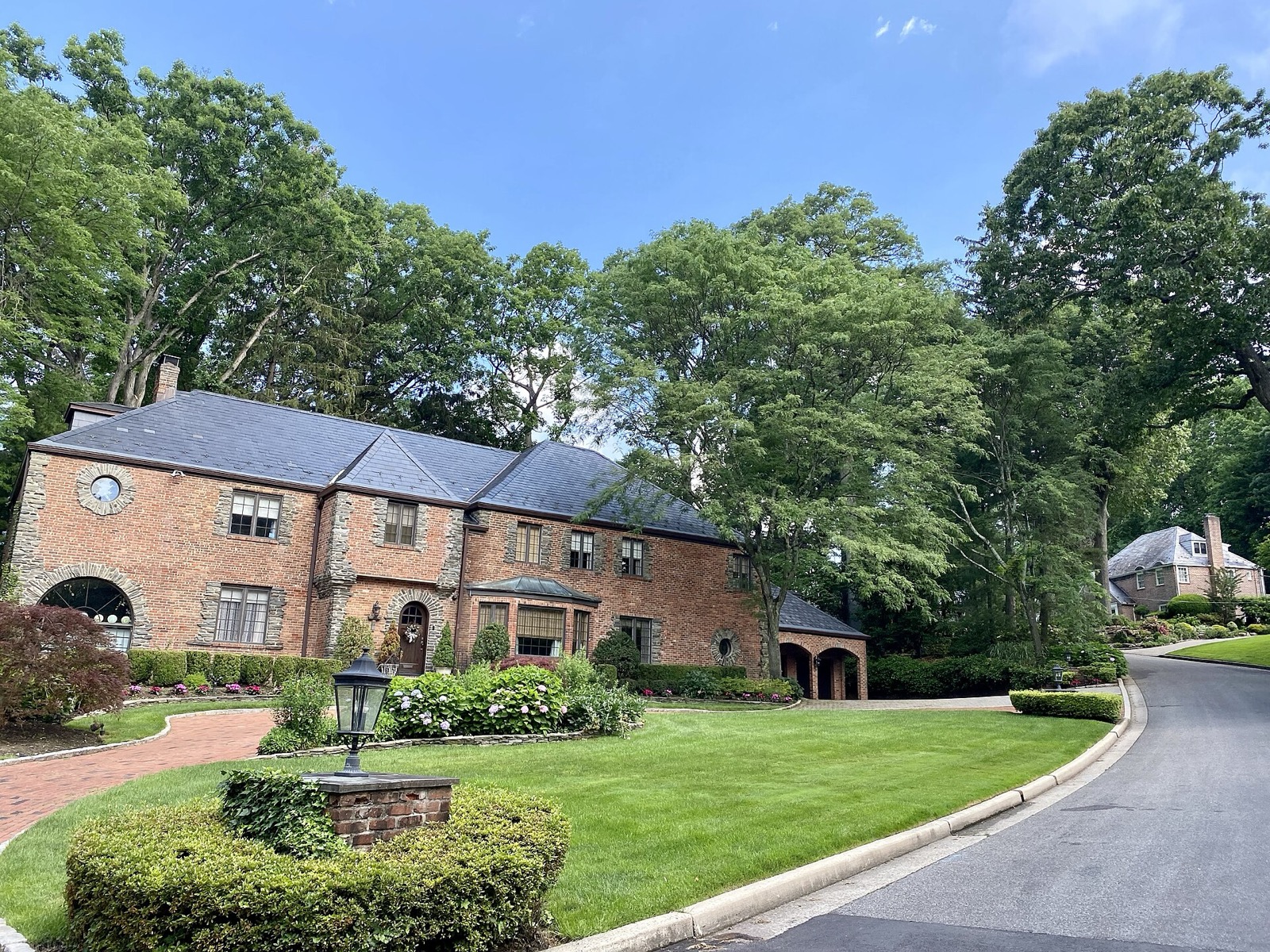
A home inspection records a house’s condition on one day; it does not set its price or guarantee its future. The state regulates who may inspect and what the report must contain. The prices below come from one private company’s survey. More buying guides cover the costs on either side of the inspection, including closing costs.
What is included in a home inspection
A home inspection is a limited, non-invasive examination of the condition of a home, often done in connection with a sale. A home inspector determines the condition of a structure, while an appraiser determines the value of a property. The findings cover the home’s condition at the time of inspection, with no guarantee of future condition, efficiency or life expectancy of systems or components.
New York’s standards establish a minimum and uniform standard for home inspectors. The report must clearly identify which systems and components of the residential building were observed. Inspectors may only report on readily accessible and observed conditions, as outlined in the pre-inspection agreement. A home inspection is not an inspection to verify compliance with codes.
A home inspection shall not include an inspection for radon or pests. Items often needed to satisfy mortgage or title requirements, such as termite inspections, are usually obtained separately unless specifically advertised as part of the inspection. For older properties with private wastewater systems, the cesspools and sewers guide covers the regulatory side.
Radon: a separate test
Radon is a radioactive gas that has been found in homes all over the United States. Testing is the only way to find out a home’s radon levels. EPA and the Surgeon General recommend testing all homes below the third floor. Nearly one out of every 15 US homes is estimated to have an elevated radon level, 4 pCi/L or more, and levels under 4 pCi/L still pose a risk. Even very high radon levels can be reduced to acceptable levels. In the U.S. Surgeon General’s health advisory reproduced in EPA’s guide, radon “can be detected with a simple test and fixed through well-established venting techniques”.
For a purchase, a home that has not been tested should be tested. A buyer may ask the seller for a new test by a qualified radon tester, especially when the last test is not recent, for example within two years. EPA advises testing in the lowest level of the home that could be used regularly. The EPA buyer’s and seller’s radon guide carries the March 2018 revision date.
Who can inspect in New York
No person may conduct a home inspection for compensation, or represent that they can, unless licensed, or acting as an architect or engineer within that profession or in a building-code enforcement role. The license standards are set out in the Department of State licensing document (March 2026 edition).
| Licensing item | Rule |
|---|---|
| Education | High school or equivalent |
| Course of study | At least 140 hours, including 40 hours of unpaid field-based inspections |
| Alternative route | At least 100 home inspections under the direct supervision of a New York licensed inspector |
| License term | 2 years |
| First application and license | $250 |
| Renewal | $100 |
| Examination | $50 |
| Civil penalty | Up to $1,000 per violation |
A residential building, for licensing, is a structure of 1 to 4 dwelling units and their garages and carports. Architects and professional engineers registered with the NYS Office of Professions are exempt when practicing within their profession, as are code enforcement employees acting within their government employment. Licensed inspectors must complete 24 hours of approved continuing education within each two-year renewal period. The Department of State has no reciprocity with any other state’s home inspector licenses. The Department’s home inspector FAQ covers these points.
Every licensed inspector must secure, maintain and file proof of liability coverage with the state. The license number and status must appear on every report and in all advertising. Nothing in the licensing article authorizes a home inspector to practice engineering or architecture.
Report rules and conflicts of interest
Before any inspection, the inspector must give the client a written pre-inspection agreement that clearly and fully describes the scope of service and its cost. The written report is due no later than five business days after the inspection is completed. The report and its contents are confidential and cannot be disclosed without the client’s express consent. The duty of every home inspector is to the client.
The law also limits conflicts. An inspector may not inspect a building in which the inspector, a partner or a relative has a financial interest. An inspector may not repair, improve or replace a component they reported on before the close of escrow. Pay may not be contingent on the report’s conclusions or on the closing of the transaction.
Can you skip a home inspection?
A contract to purchase a house may include a contingency that the contract is not valid until the buyer, through a home inspector or other agents, has had an opportunity to verify the condition of the property. Home inspections are vital to the homebuying process because they can expose hidden problems in the home, such as deferred maintenance, structural issues, mold or faulty wiring that could cause a fire.
Choosing an inspector and avoiding scams
In a home inspection scam, a provider may hide potential problems to increase referrals or as part of a collusive arrangement. The Department of State’s Division of Consumer Protection, in its April 11, 2023 alert, advises avoiding inspectors referred through real estate agents or others who may not share the buyer’s interests. It points buyers to the Department’s Public License Search database to confirm a New York license, and to confirm that the inspector can access all areas of the property and that the buyer receives a copy of the report. The full consumer alert is on the Department of State site.
Understanding home inspection costs on Long Island
The figures below come from one company: Modern Insight, which published a Spring 2026 pricing survey of Long Island home inspectors. They are that company’s posted data, seen on 2026-10-20, not a government schedule.
| Measure | Figure |
|---|---|
| Typical range | $450 to over $950 |
| Where most buyers land | $550 to $700 |
| 2026 median | $643 |
| Change in average price vs Fall 2024 | Up 13.3% |
| Change in median price vs Fall 2024 | Up 16.8% |
All quotes in that survey were requested for a roughly 1,800 square foot home built in the 1950s in Nassau County. Each inspector was asked to include a wood-destroying insect inspection in the price.
Home size and property age in a quote
The survey priced one house type: a roughly 1,800 square foot home built in the 1950s. Homes over 5,000 square feet are priced individually rather than from the standard schedule. Each inspector was asked to include a wood-destroying insect inspection in its price, and the state’s definition of a home inspection excludes pests.
Questions buyers ask
What is included in a home inspection?
A home inspection is a limited, non-invasive examination of a home's condition, often tied to a sale. The report must identify which systems and components were observed. By state law it does not include radon or pests, and it is not a code compliance inspection.
How much does a home inspection cost on Long Island?
In Modern Insight's Spring 2026 survey of Long Island inspectors, prices ran from $450 to over $950, most between $550 and $700, with a median of $643 for a roughly 1,800 square foot Nassau home built in the 1950s. This is one company's published survey, not a government figure.
Who can do a home inspection in New York?
No one may conduct a home inspection for pay, or represent that they can, unless licensed, or acting as an architect or engineer within that profession or in a building-code enforcement role. Applicants need a course of at least 140 hours, or 100 supervised inspections.
How soon do you get the home inspection report?
The inspector must give the client a written report of findings within five business days after the inspection is completed. The report is confidential and cannot be disclosed without the client's express consent.
Does a home inspection check for termites?
Not under state law: a home inspection shall not include an inspection for radon or pests. Termite inspections are usually obtained separately unless advertised as part of the inspection. The Spring 2026 Modern Insight survey asked each inspector to include a wood-destroying insect inspection in its price.
Should a buyer test for radon?
Testing is the only way to find out a home's radon levels, and EPA and the Surgeon General recommend testing all homes below the third floor. Nearly one in 15 US homes is estimated to have an elevated level of 4 pCi/L or more. A state home inspection excludes radon.
Read next
Buying
Buyer Closing Costs on Long Island: Transfer, Mansion and Mortgage Tax
Who pays New York's transfer tax and mansion tax, how the mortgage recording tax works in Nassau County, and which Clerk recording fees apply to a purchase.
Buying
Cesspools and Sewers in Nassau County: Connection Rules and Replacement Grants
Nassau County's sewer connection rule, how a cesspool differs from a septic tank, and the state and county grants that pay to replace old systems.
Buying
FEMA Flood Zones on Long Island's North Shore: Maps, Risk Levels and Insurance
FEMA flood zone letters and risk levels, how to find your zone, when flood insurance is required and the Oyster Bay Town and Sea Cliff rules.
Sources
- Home Inspection Professional Licensing, Article 12-B Real Property Law and 19 NYCRR Part 197, March 2026 (via Wayback) · NYS Department of State, Division of Licensing Services · dos.ny.gov · checked October 20, 2026
- Home Inspection Costs in NY: Long Island & NYC Price Guide · Modern Insight (home inspection company, Long Island) · mihiny.com · checked October 20, 2026
- Home inspection - Wikipedia · Wikipedia · en.wikipedia.org · checked October 20, 2026
- Home Buyer's and Seller's Guide to Radon, EPA 402/K-13/002, March 2018 (EPA web snapshot, January 2021) · US Environmental Protection Agency · 19january2021snapshot.epa.gov · checked October 20, 2026
- Frequently Asked Questions - Home Inspector, NYS Department of State (via Wayback) · NYS Department of State · dos.ny.gov · checked October 20, 2026
- Consumer Alert: Scam Prevention Tips for First-Time Homebuyers, April 11, 2023 (via Wayback) · NYS Department of State, Division of Consumer Protection · dos.ny.gov · checked October 20, 2026
Photos (1)
- LINYperson615, CC BY-SA 4.0

Tax rates, fees and schedules change every year: each note shows the date it was checked. How we check facts · Report an error.