In this file
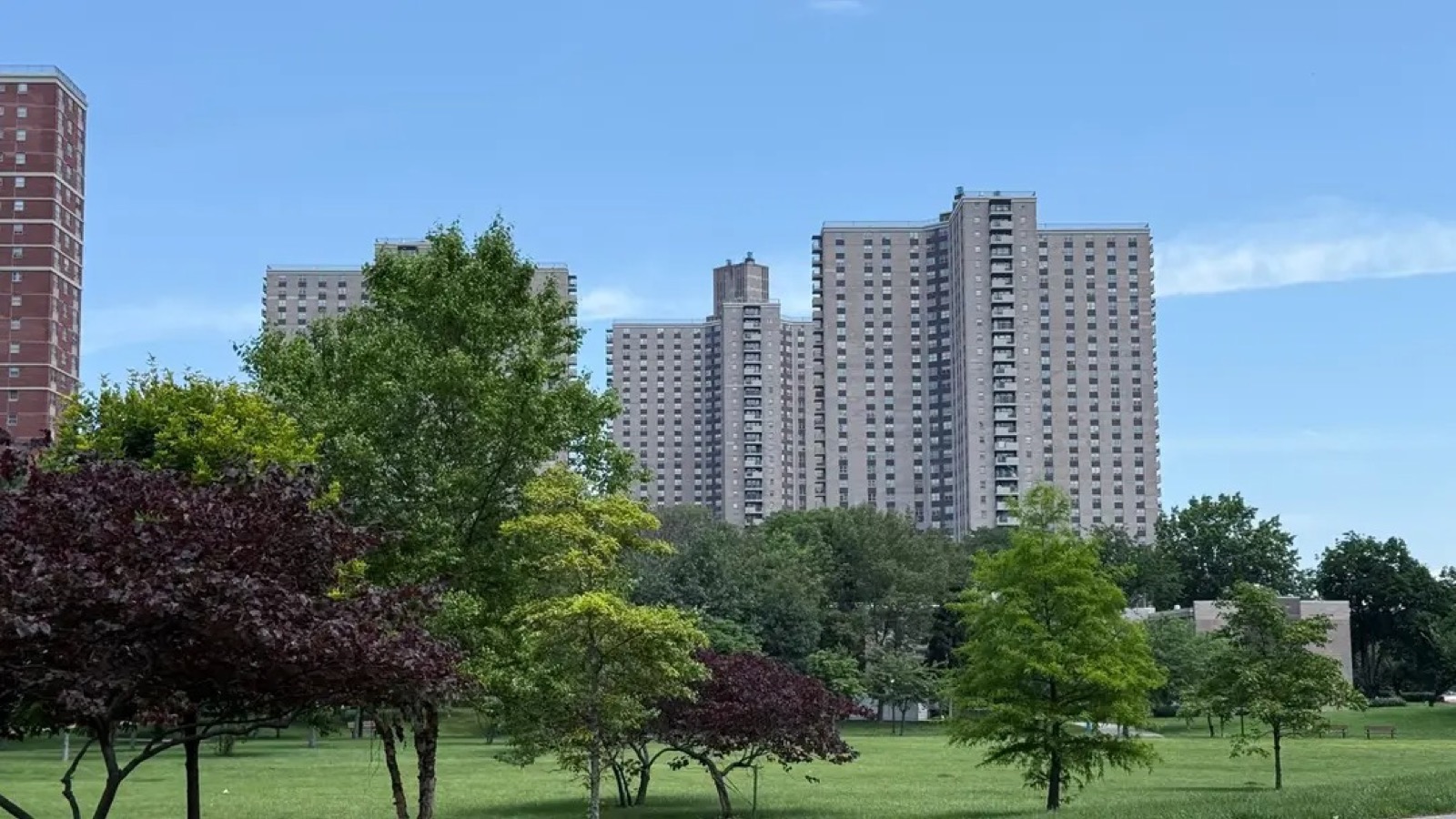
This page sets out how co-op and condo ownership work, what a buyer reads before signing and which repair costs the state flags. The buying guides cover the steps around it, including the home inspection and closing costs.
How a co-op works
In a co-op, a purchaser buys shares in a corporation. Those shares are allocated to a specific apartment. Ownership of the shares entitles the purchaser to a long-term proprietary lease for the apartment. Each co-op owner pays maintenance charges based on the number of shares allocated to the apartment.
A shareholder owns a share of the co-operative housing corporation but does not directly own any real estate. A housing cooperative’s board of directors is elected by the membership. Housing co-op tenure is either non-equity or equity. There are two main types of share pricing: market rate and limited equity.
With market-rate shares, the price can rise on the open market and shareholders may sell at whatever price the market will bear. A limited-equity co-op has rules on how shares are priced when sold. In New York City, a portion of owner-occupied apartments are held through cooperative arrangements rather than condominiums. Co-op City in The Bronx is the largest cooperative housing development in the world, with 55,000 people.
How a condo works
A condominium is a single real estate unit in a multi-unit development. The owner holds the unit and an undivided interest in the common elements of the building. A sponsor converting a building to condominiums must simultaneously provide a copy of the initial draft plan, known as the red herring, to all tenants of record.
| Co-op | Condo | |
|---|---|---|
| What the buyer owns | Shares in a corporation, allocated to one apartment | A single unit plus an undivided interest in common elements |
| Right to occupy | Long-term proprietary lease | Ownership of the unit |
| Real estate owned directly | No; the shareholder owns shares | Individual units |
The offering plan
Sales of co-op and condo units are made under the terms and conditions of an offering plan. The Real Estate Finance Bureau reviews offering plans to ensure compliance with the Attorney General’s regulations. The text of the offering plan governs the sponsor’s obligation regarding the size and construction of the buildings.
The Attorney General highly recommends that a prospective purchaser read the entire offering plan and consult with an attorney before signing a purchase agreement.
Selling agents frequently make grandiose statements about ancillary spaces or amenities. On a resale from an individual owner, the offering plan may not have current or accurate disclosure about the building’s condition, or there may be no offering plan at all. That is not a violation of any law or regulation, and a sale by an individual unit owner is not regulated by the Attorney General and requires no offering plan.
Where the sponsor or its representatives have made material representations that are not clearly set out in the purchase agreement or offering plan, buyers should get them in writing, for example in a rider to the purchase agreement. Offering plans frequently state that the sponsor can substitute equal or better appliances, but not appliances of lesser quality.
Building condition and repair costs
The purchase of a unit in a cooperative or condominium has many significant legal and financial consequences. An analysis of the physical aspects of the property is just as important as location, size and price. The analysis can be difficult and technical, and buyers may rely on an engineer and an attorney.
The most expensive problems in existing buildings involve facade defects. Pointing, which means repairing the mortar between the bricks, plus roof and elevator repairs, are also expensive. Other significant problems include plumbing upgrades, electrical upgrades, boiler replacements and significant cosmetic upgrades. A buyer should not be deterred by a need for some repairs but should be aware of potentially expensive building-wide repairs. The minutes of board meetings are a very good source of information about a building, and a year of minutes is likely to describe whatever defects exist. The most recent financial report may carry information about defects, such as the cost of repairs, in the accountant’s footnotes. A buyer can ask the sponsor or selling agent, in writing, for a list of defects known to them.
In a converted building, the sponsor must have an engineer evaluate the building, and the offering plan must disclose all defects visible to that engineer. Not every defect has to be corrected, so long as it has been disclosed. The written list of defects from a walkthrough is known as a punch list. See the home inspection guide for how a pre-purchase inspection fits in.
New construction
In 1989, New York passed a law to protect buyers of new homes. The seller of a newly constructed home of five stories or less guarantees it for one year against almost any defect, for two years against defects in the mechanical systems and for six years against structural defects. Read the Attorney General’s pre-purchase guidance alongside any offering plan.
A buyer of a unit under construction should first understand that the offering plan’s text governs the sponsor’s obligation on the size and construction of the buildings. The written list of defects from a walkthrough is the punch list, and the builder must repair those defects either before or after the closing of title. If the work comes after closing, the punch list and the builder’s written commitment become part of the closing documents and should be expressly listed as surviving the closing.
Checks a buyer can make before closing
The Attorney General lists checks that need no technical training.
| Check | What to look for |
|---|---|
| Plumbing | Open all faucets; water pressure should look satisfactory and drainage sufficiently rapid |
| Ceilings and walls | Spots that might indicate leaks |
| Basement | Spots on the floor that could indicate flooding |
| Electrical | Loose wires and fixtures without covers, particularly in the basement |
| Foundation | Cracks in concrete walls and floors, noting that thin hairline cracks can be normal as concrete dries |
If a problem turns up after purchase
A buyer who purchased from the sponsor should first review the offering plan to see whether the problem was disclosed. Complaints are most effective when the complaints of all unit owners in a development are assembled into one. After a resale from an individual or company, the contract terms and applicable laws control the buyer’s rights.
Federal tax treatment of a co-op
An owner of a cooperative apartment owns shares of stock in a corporation that owns or leases housing facilities. The basis of a cooperative apartment is the amount paid for the shares, including purchase commissions and other costs of acquiring them. Interest on a loan used to buy co-op stock can usually be treated as home mortgage interest when the cooperative housing corporation meets the conditions for cooperatives. A patronage dividend is a partial refund to the cooperative housing corporation of mortgage interest it paid in a prior year.
IRS Publication 530 (2025) lets a stockholder deduct a share of the corporation’s deductible real estate taxes if the corporation meets its conditions. The corporation has only one class of stock outstanding. Each stockholder, solely because of owning the stock, can live in a unit owned or leased by the corporation. No stockholder can receive a distribution out of capital, except on a partial or complete liquidation. The corporation must also meet at least one of three tests: at least 80% of its gross income was paid by tenant-stockholders, at least 80% of its total square footage is available for use by tenant-stockholders, or at least 90% of its expenditures went to the property for the tenant-shareholders’ benefit.
The tenant-stockholder does not have to live in any of the cooperative’s dwelling units, and the units the stockholder has the right to occupy can be rented to others. A stockholder’s share of the real estate taxes comes from dividing the number of shares held by the total shares outstanding, including shares held by the corporation. Details are in IRS Publication 530.
Agent disclosure on co-op and condo sales
The agency-disclosure law defines residential real property to include condominium or cooperative apartments. A buyer’s agent is an agent who contracts to locate residential real property for a buyer. The disclosure form given at showings is covered in open houses.

Questions buyers ask
Is it better to own a condo or co-op?
The structures differ. A co-op buyer owns shares and a proprietary lease; a condo owner holds a unit plus an undivided interest in the common elements. Co-op ownership is distinct from condominiums, where people own individual units.
What are the downsides of buying a co-op?
Each co-op owner pays maintenance charges based on shares, and a shareholder owns shares, not the real estate directly. The most expensive problems in existing buildings involve facade defects, with pointing, roof and elevator repairs also costly.
What is an offering plan?
Sales of co-op and condo units are made under the terms of an offering plan. The Real Estate Finance Bureau reviews offering plans for compliance with the Attorney General's regulations. The plan's text governs what the sponsor must build.
Can I deduct co-op loan interest?
In Publication 530 (2025), interest on a loan taken out to buy stock in a cooperative housing corporation can usually be treated as home mortgage interest when the corporation meets the IRS conditions for cooperatives. A co-op's basis is the amount paid for the shares, including purchase commissions and other costs of acquiring them.
How long are new homes guaranteed in New York?
A 1989 New York law protects buyers of new homes. The seller of a newly constructed home of five stories or less guarantees it for one year against almost any defect, two years against defects in mechanical systems and six years against structural defects.
Do agent disclosure rules cover co-ops and condos?
Yes. The law's definition of residential real property includes condominium or cooperative apartments. The disclosure form is titled New York State Disclosure Form for Buyer and Seller and is not a contract.
Read next
Buying
Home Inspection on Long Island: What It Covers, What It Costs and Who Can Do It
What a New York home inspection includes and leaves out, the state licensing and report rules, and one company's Spring 2026 Long Island price survey.
Buying
Buyer Closing Costs on Long Island: Transfer, Mansion and Mortgage Tax
Who pays New York's transfer tax and mansion tax, how the mortgage recording tax works in Nassau County, and which Clerk recording fees apply to a purchase.
Buying
Open Houses in New York: Agent Disclosure Rules, Broker Procedures and Offer Scams
What New York law requires of agents at open houses: the disclosure form, broker visitor procedures, buying without an agent and how iBuyer offers compare.
Sources
- Cooperatives - New York State Attorney General · New York State Attorney General · ag.ny.gov · checked October 20, 2026
- Condominiums - New York State Attorney General · New York State Attorney General · ag.ny.gov · checked October 20, 2026
- Before You Buy a Co-op or Condo - New York State Attorney General · New York State Attorney General · ag.ny.gov · checked October 20, 2026
- Publication 530, Tax Information for Homeowners - IRS · Internal Revenue Service · irs.gov · checked October 20, 2026
- Housing cooperative - Wikipedia · Wikipedia · en.wikipedia.org · checked October 20, 2026
- NY Real Property Law 443, Disclosure regarding real estate agency relationship; form (via Wayback) · New York State Senate · nysenate.gov · checked October 20, 2026
Photos (2)
- Kidfly182, CC BY 4.0
- Beyond My Ken, CC BY-SA 4.0


Tax rates, fees and schedules change every year: each note shows the date it was checked. How we check facts · Report an error.